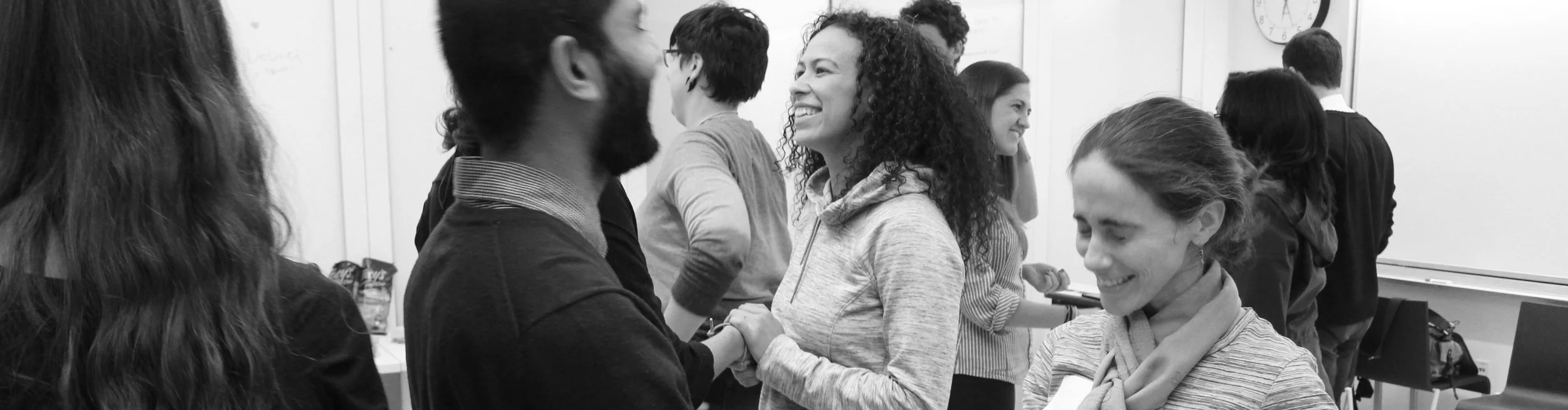
Social Art Residency
transformation as a social art form
Role: Core Team | Project: La Vaca Independiente, and the Presencing Institute (MIT). Location: Yucatan, Mexico.
Core Team: Arawana Hayashi, Claudia Madrazo, and Ricardo Dutra
Website: https://socialart.mx
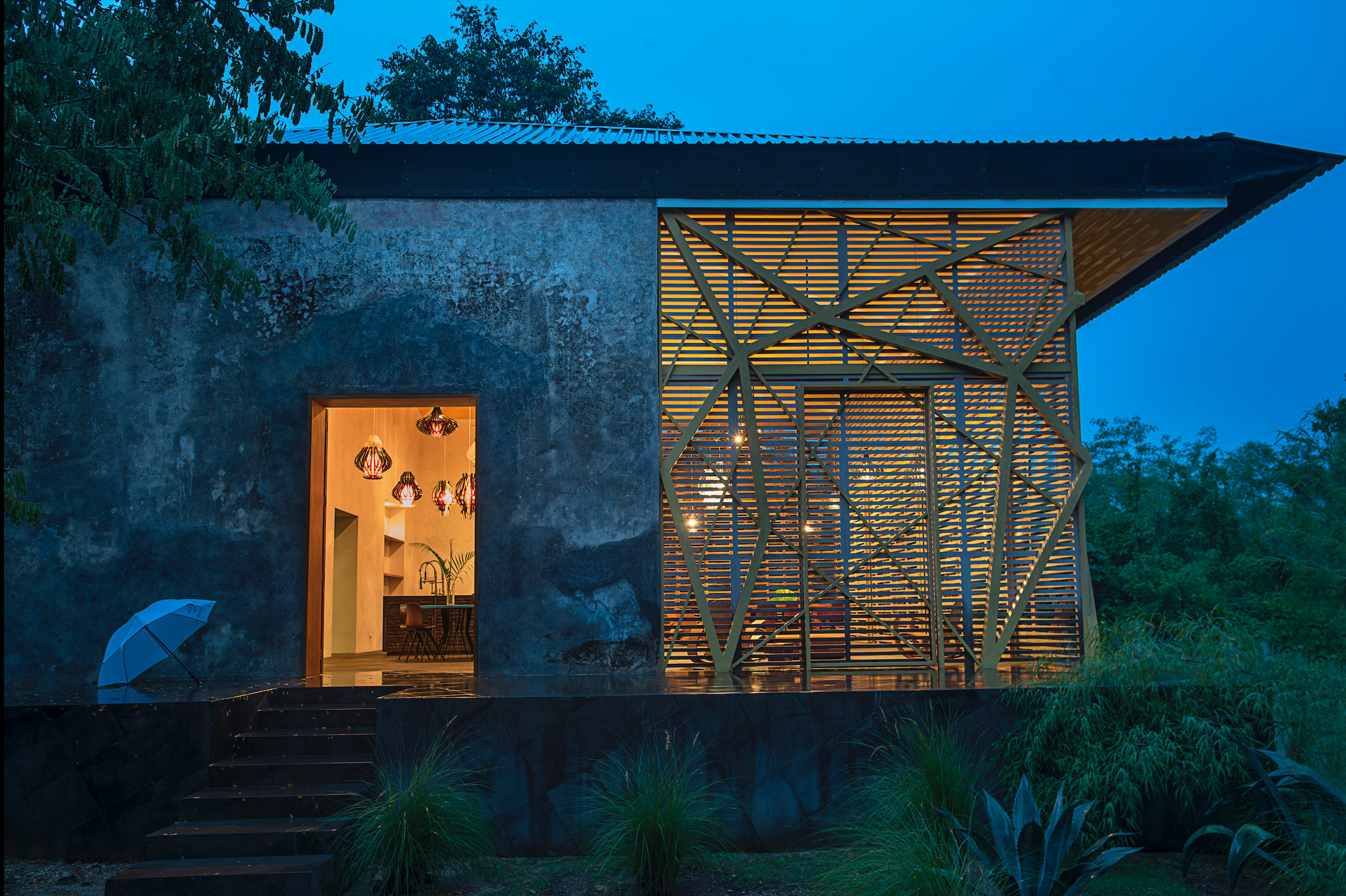
Location: Tecoh, a site specific art project that involved the restoration of an old Hacienda in the Yucatan, Mexico. Artist: Jorge Pardo.
We have been co-designing 10-day immersive interdisciplinary residencies for designers, artists, performers, architects, film makers, photographers, and change makers to co-create social change as an art form. The residencies are hosted at Site-Specific Art places in the Yucatan, Mexico.
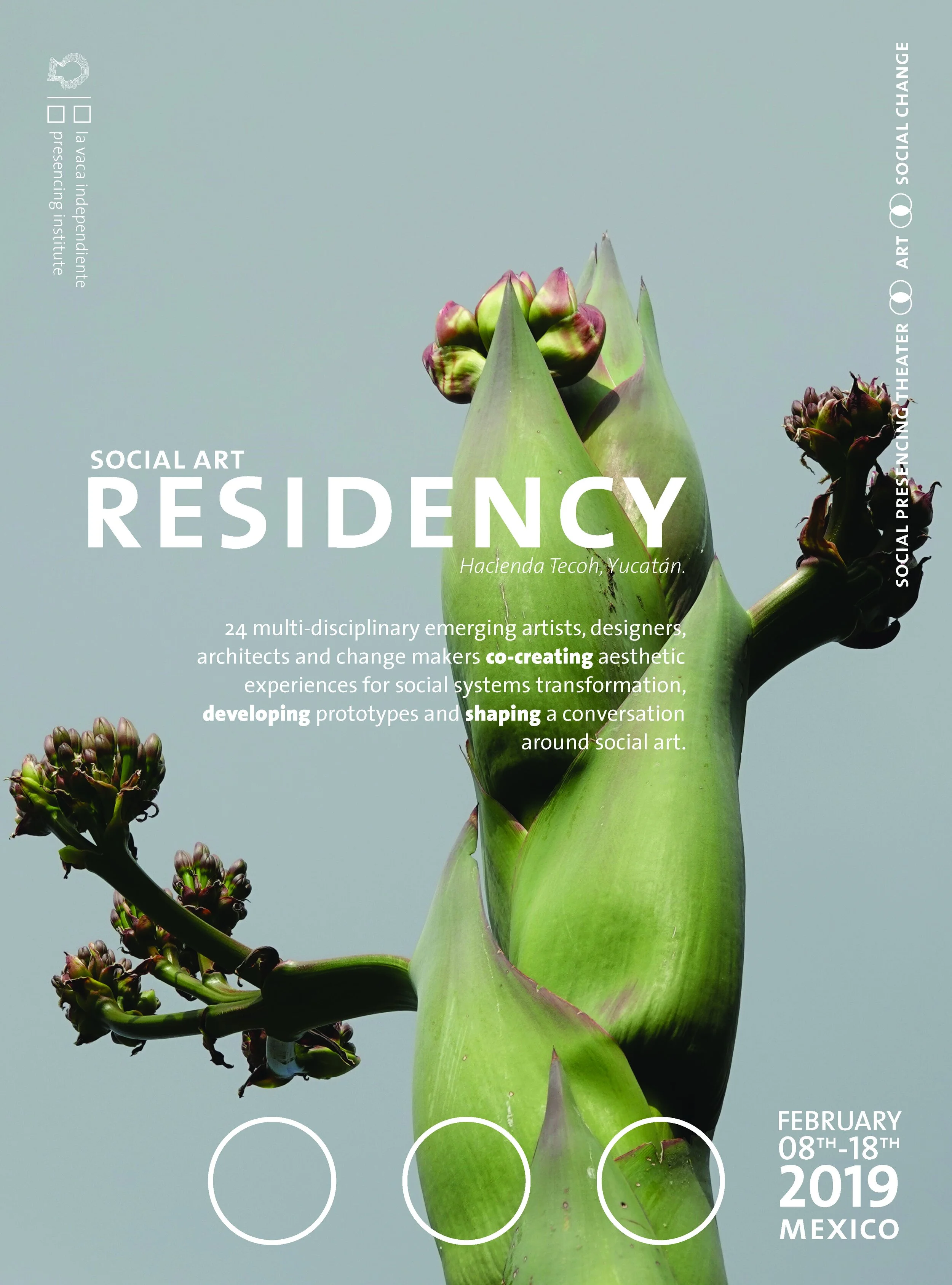
Invitation Poster for Social Art Residency, 2019.
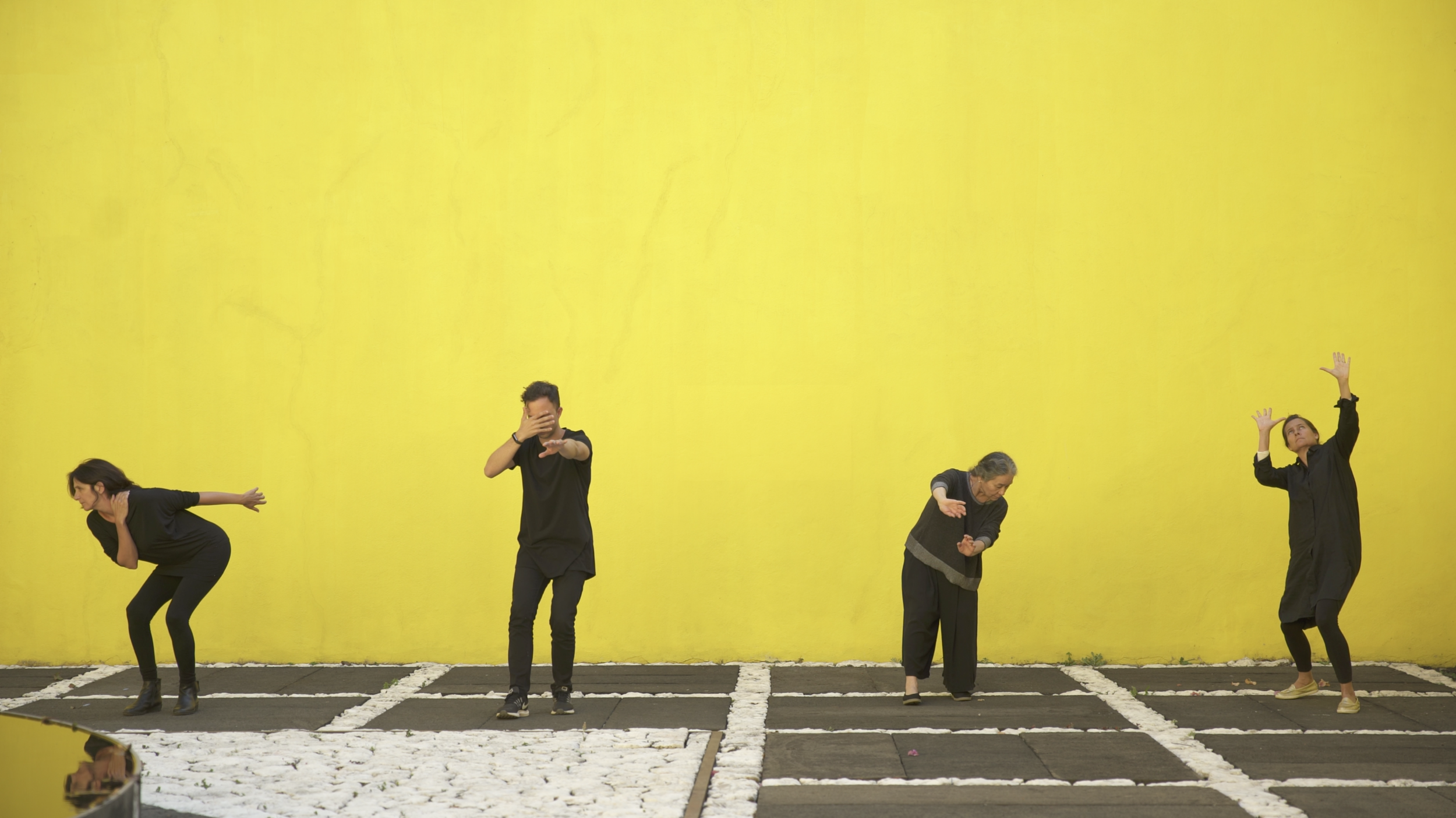
Video: Invitation for Social Art Residency, 2019.
the frames we explore
Traditional art is usually set to museum spaces and galleries. Art is seen as an artefact – and the figure of the “artist” is seen in isolation. Beginning from a different frame – what if art was collectively made? If the “artist” were instead the “collective” (e.g. a social group, or movement)?
What if social transformation was itself an art form?
How would this art be made visible?
What principles would this “art” form be based on?
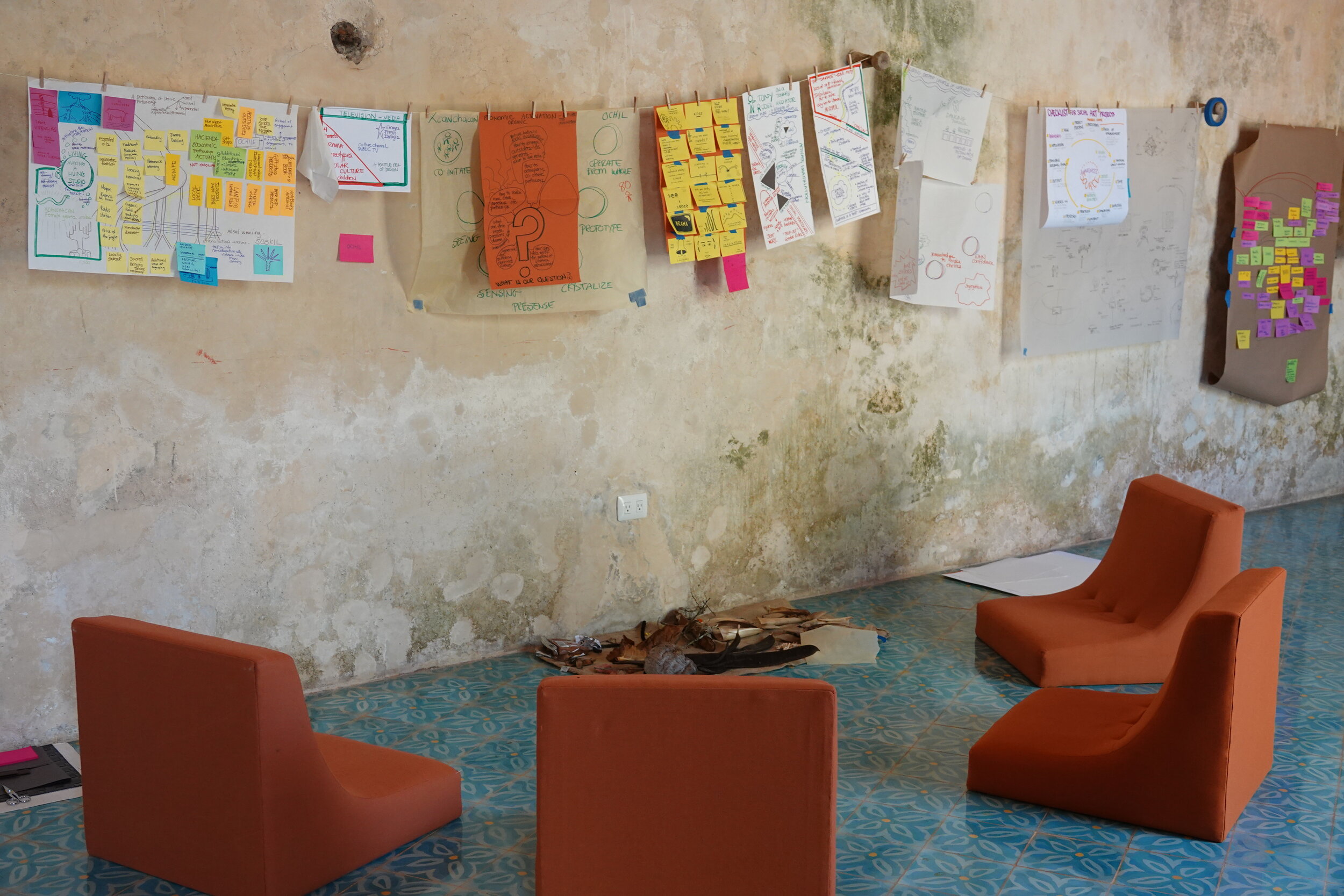
Process evidence.
outputs
Over 10 days the residents engage in creative processes to generate content for a “social art piece”, which could be a performance, an experience, a visual art form, a film, etc. This “product” is collectively made, and hence it is no one’s particular authorship. The final “piece” is “showed back” to the community. In that way, sparking dialogue, reflection, and – potentially, fresher ways of viewing social reality.
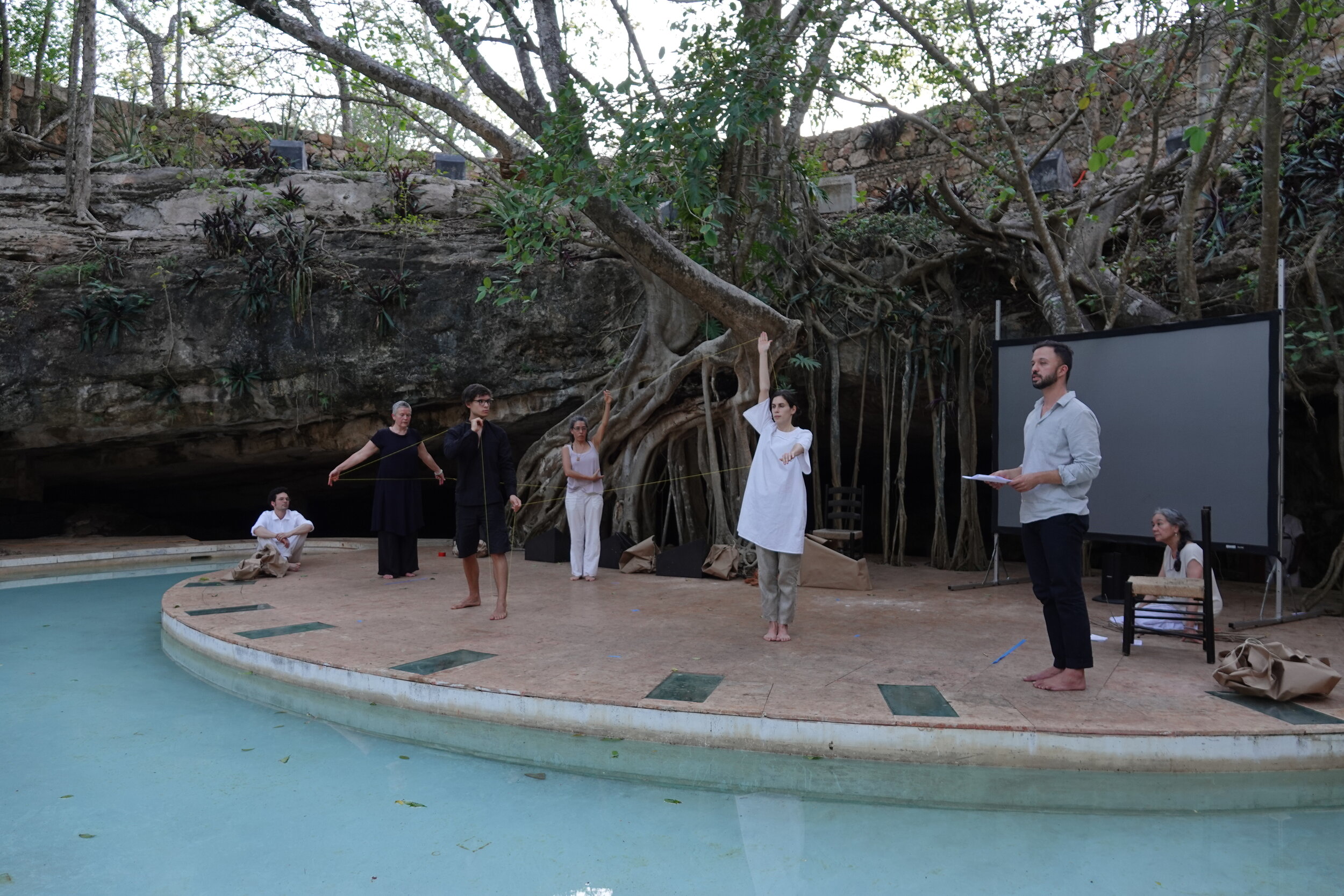
Following community journeys, residents perform a theater-piece to spark a “social reflection” on Mayan culture, nature, and land.
Video: Social Art Studio Residency, 2020.
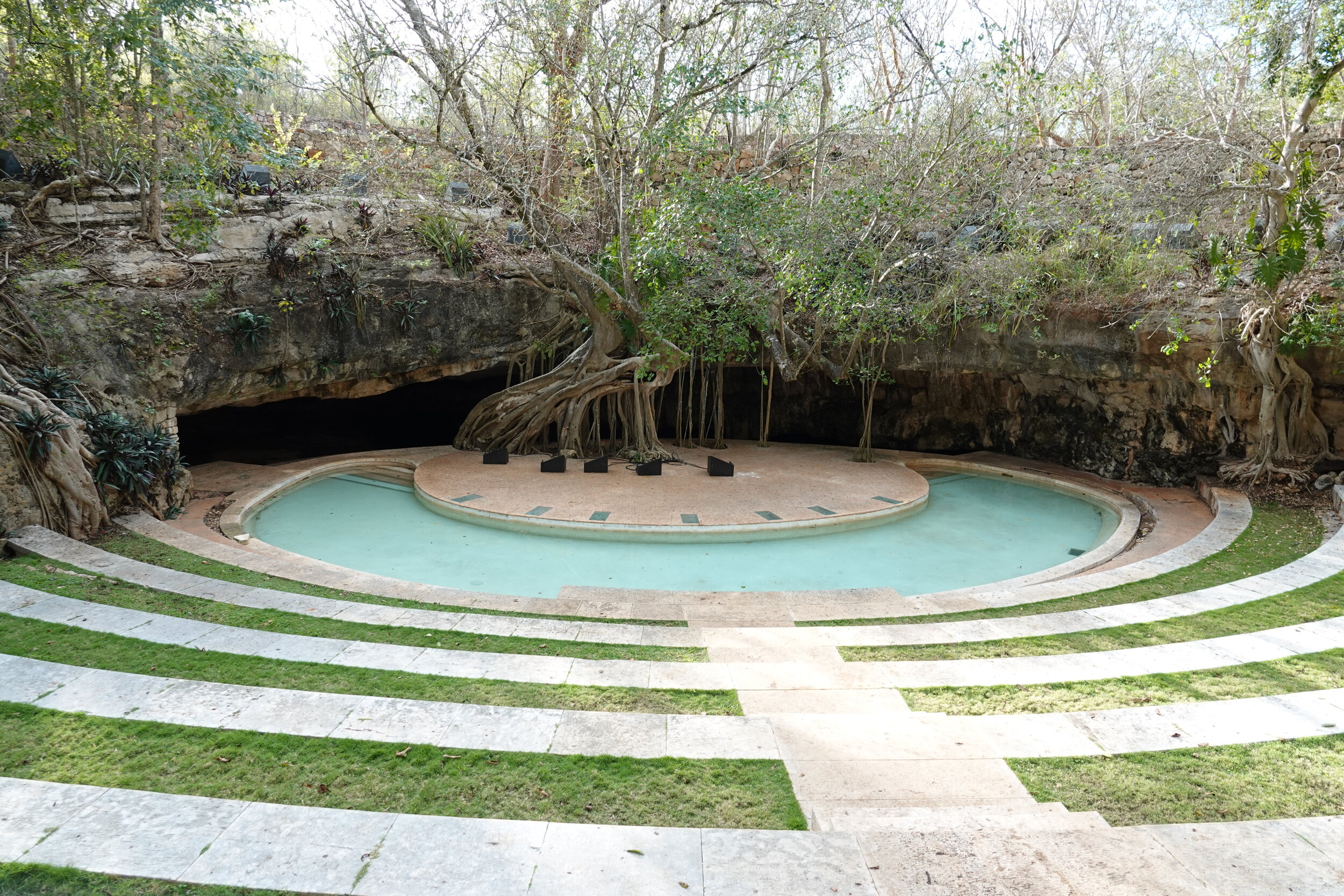
Social Performance was held at a Site-Specific Art place, an amphitheater designed by light artist James Turrell. Yucatan, Mexico.